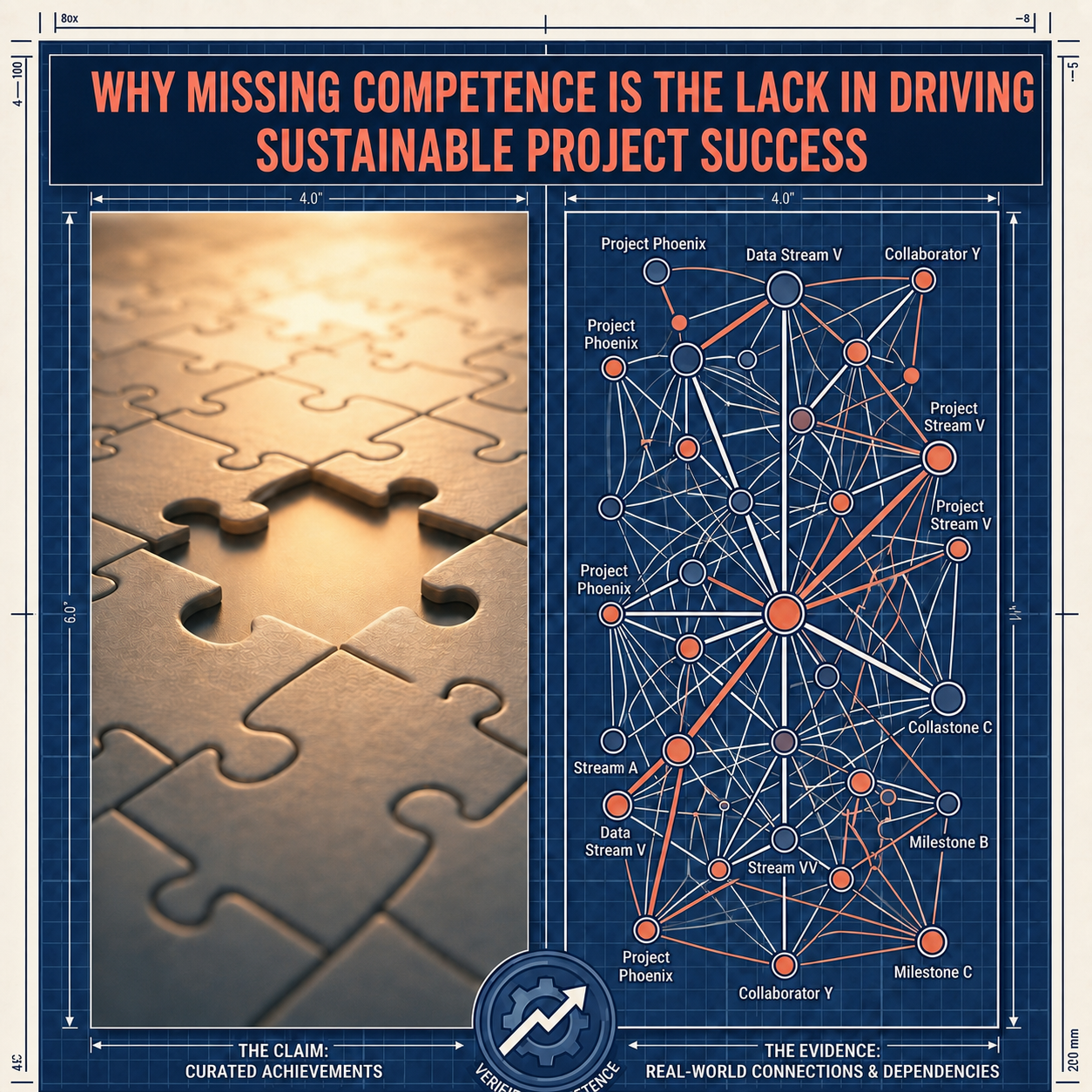
The usual explanations fall short — we believe the underestimated variable is always the team / the human.
The numbers are clear and have been consistent for years. The Standish Group CHAOS Report regularly analyzes tens of thousands of projects worldwide. The result: only 16.2% are classified as successful — meaning delivered on schedule, on budget, and with the promised functionality. 52.7% overrun time or budget. 31.1% are cancelled or abandoned. McKinsey reaches similar conclusions for transformation projects: around 70% fail. And not only that — large, complex transformation projects are often quietly buried and written off after years of delay. What remains is frustration among project members and employees, and within the leadership team as well.
According to a McKinsey-Oxford study, IT projects with budgets over 15 million dollars overrun their budgets by an average of 45%, their schedules by 7% — and deliver 56% less value than predicted.
The usual suspects
When you ask about the reasons, the answers across every publication read very similarly: unclear requirements, poor communication, missing stakeholder management, unrealistic timelines. PMI names poor planning, lack of communication, and unclear goals as the top three causes. None of this is wrong. But it’s not the whole truth either.
The underestimated variable
What gets surprisingly little space in most analyses: the composition of the project team. Who is part of the team? Do these people actually bring the capabilities the project needs? How many of which capabilities, and for how long? Have they done this before, or does the person “only” hold a certification? Does their working style and mindset fit the team and the role — or is it more important to bring in someone with the social skills to hold the team together, even at the cost of less domain expertise? Do team members complement each other — or do they hold each other back? Do they have experience with comparable delivery challenges?
The honest answer to these questions, most of the time, is: no one really knows. Because teams are typically staffed by availability, by personal network, by CVs, by gut feeling — but rarely by genuinely validated suitability.
When 70% of projects fail, and at the same time team composition is the least data-driven process in most organizations — then, in our experience, that’s not a coincidence. It’s one of, if not the, biggest blind spots.
What this means
Better planning alone isn’t enough. Better tools alone aren’t enough. What’s missing from today’s corporate processes is the ability to systematically identify which capabilities a project actually needs, which people demonstrably bring them, and to make those resources purposefully usable — and to develop them further sustainably. Not based on CVs, but on real, lived, transparent experience.
The 70% are not a law of nature. They are the result of a process that is blind at its most important point — and with ARETEA, our Capability Intelligence Platform, we help close exactly these gaps.